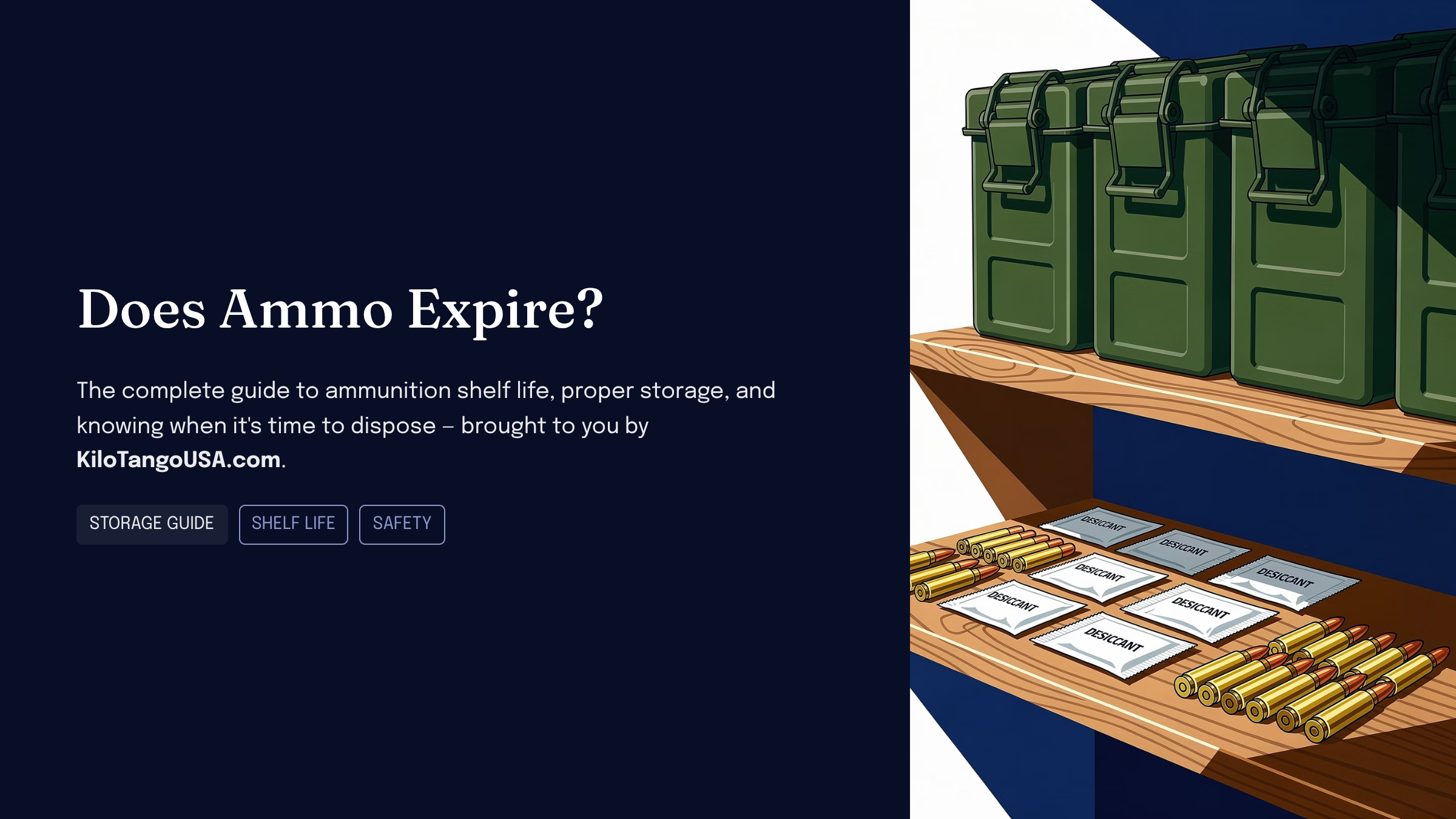
Does Ammo Expire?
Shelf life, storage, and the signs of bad ammo. The short answer: properly stored ammunition lasts decades — here's how to make sure yours does, and how to spot a round you shouldn't fire.
The Short Answer: No, Not Really
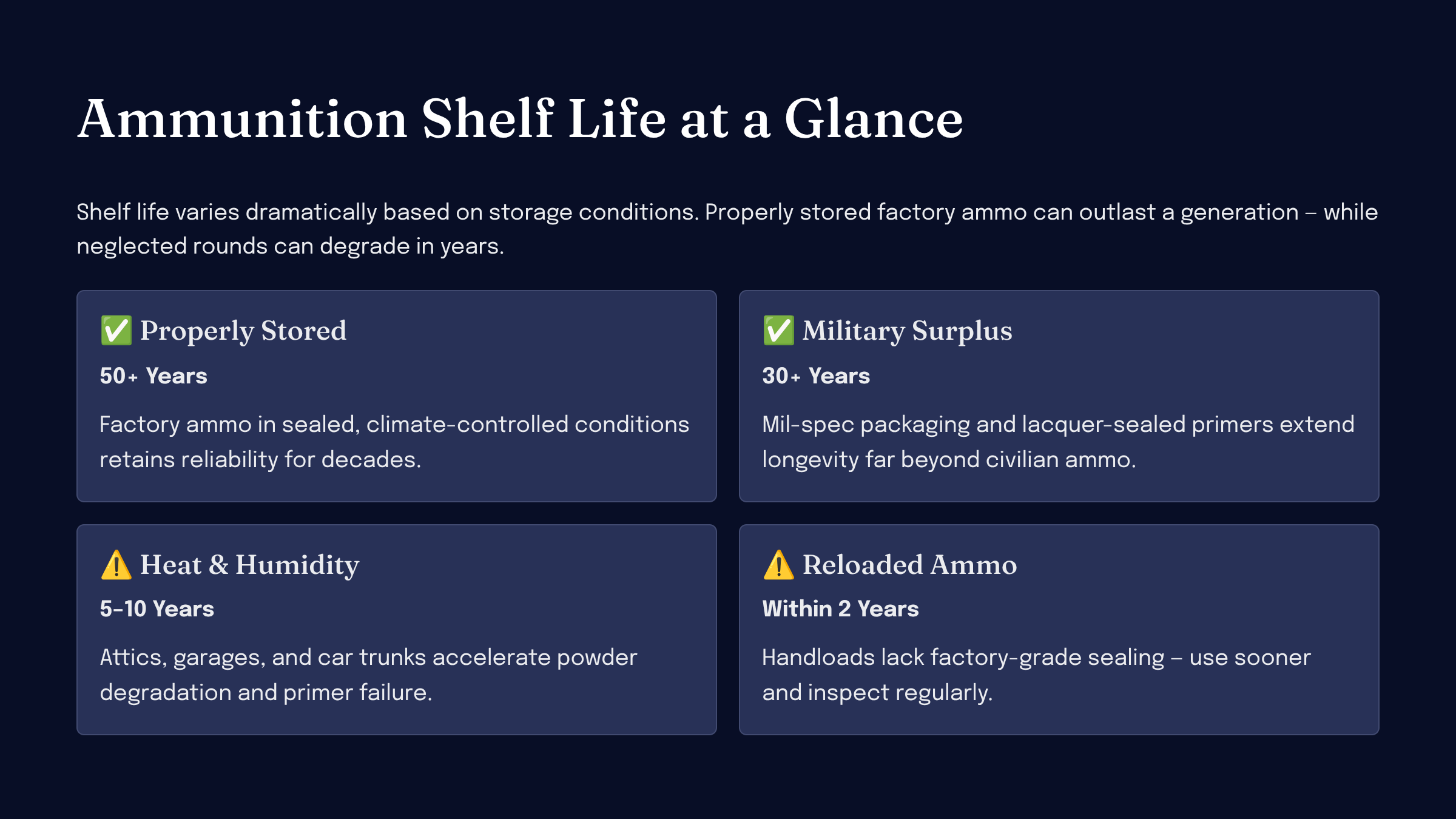
Ammunition does not expire the way milk or medication does. There is no date after which a cartridge stops working. Properly stored modern ammunition reliably lasts 20 to 30 years or more — and there are countless documented cases of decades-old ammo, even ammo from World War II, firing perfectly when it was kept dry and sealed.
You'll sometimes see a "10-year shelf life" cited by manufacturers. That number is a conservative warranty and liability figure, not a real expiration date. It's the period a maker is willing to guarantee performance under unknown storage conditions — not the point at which the ammo goes inert. In practice, the variable that decides whether ammo stays good isn't time at all. It's storage conditions. Keep moisture, heat, and humidity away from your ammo and it will outlast you. Let those creep in and even relatively new ammo can degrade.
Ammo doesn't expire on a date — it degrades from bad storage. Cool, dry, and sealed = reliable for decades. Hot, humid, and exposed = trouble, regardless of age.
Factors That Affect Shelf Life
A modern cartridge has four components — case, primer, powder, and bullet — and all of them are remarkably durable when protected. What threatens them is the environment. Four factors do nearly all the damage:
Moisture & humidity
This is the number-one enemy. Water intrusion can corrode the brass case, degrade the powder, and — most critically — penetrate the primer or powder charge and cause a misfire or a weak "squib" load. Humidity over time does the same thing more slowly. Sealed primers and case mouths (common on military and premium defensive ammo) resist this far better than standard ammo.
Heat
Sustained high temperatures accelerate chemical breakdown of the propellant and primer compounds. Occasional warmth is fine, but ammo stored in a hot attic, a car trunk through summer, or near a furnace will age far faster than ammo in a climate-controlled space. The smokeless powder itself is stabilized, but heat shortens the clock.
UV light & temperature swings
Direct sunlight and repeated freeze-thaw or hot-cold cycling stress materials and can draw moisture in through condensation as temperatures change. Storing ammo in opaque, sealed containers eliminates UV exposure and buffers temperature swings.
Corrosion & contamination
Contact with solvents, oils, and cleaning chemicals is surprisingly damaging. Petroleum products and bore solvents can wick into the primer or powder and kill a round. Never store ammo soaked in oil or next to open solvents — this is a common, avoidable way people ruin otherwise-good ammunition.
Spraying ammo with lubricant "to protect it" does the opposite. Oil and solvents migrate into the primer and powder and cause misfires. Keep ammo dry and clean — not lubricated.
How to Store Ammo Properly
Good storage is simple and cheap, and it's the single best thing you can do to guarantee your ammo lasts. Follow these rules:
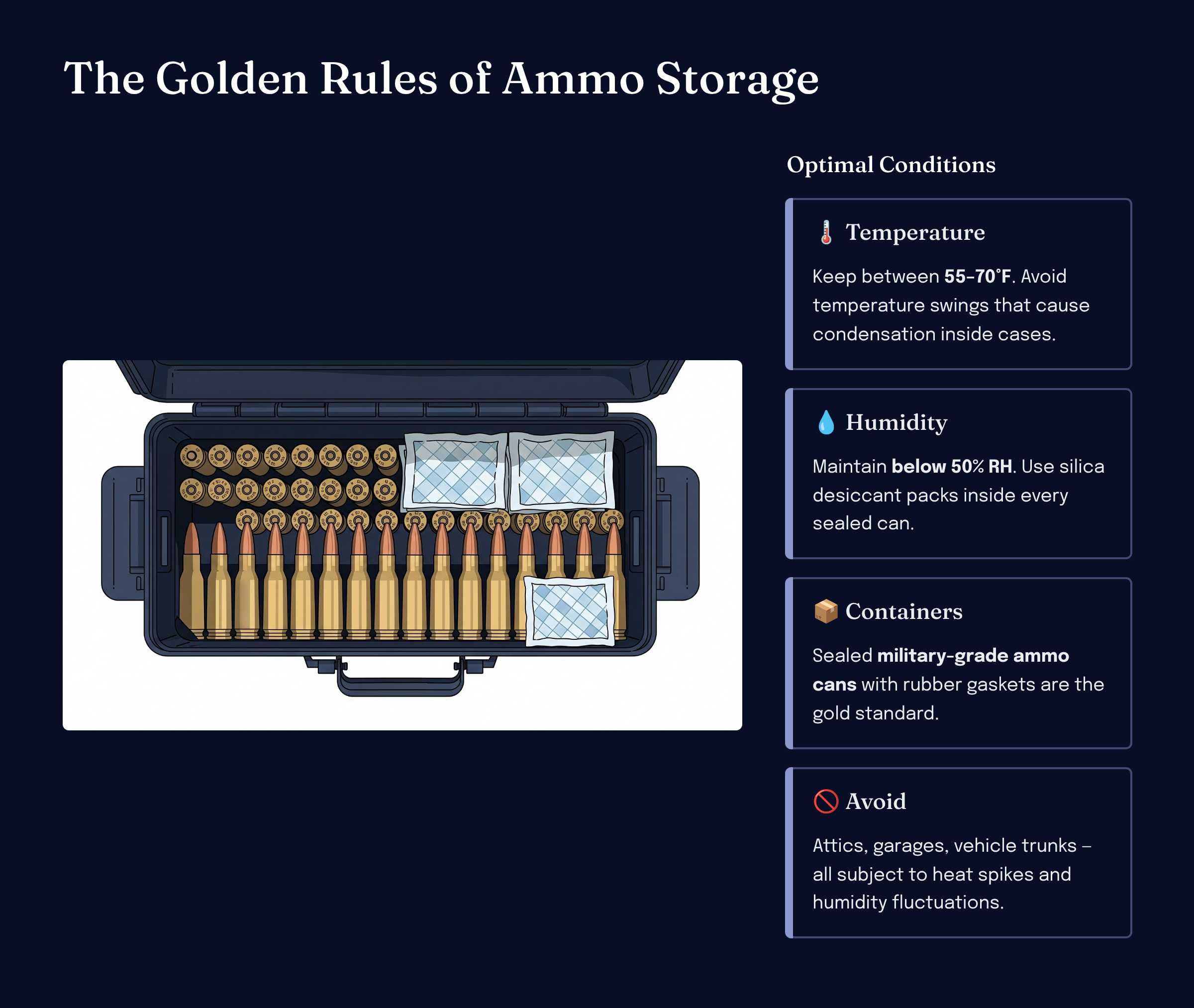
- Keep it cool. A consistent room temperature is ideal — think interior closet, basement (if dry), or living space, not the attic, garage, or car trunk. Below ~70°F and stable is the goal.
- Keep it dry. Aim for low humidity (ideally under 50%). This is the most important factor by far.
- Seal it. Military-style steel ammo cans with a rubber gasket are the gold standard — airtight, opaque, durable, and stackable. Quality sealed plastic ammo boxes work too. The goal is an airtight, light-proof barrier.
- Add desiccant. Toss a silica gel desiccant pack into each sealed can to absorb residual moisture. Recharge or replace it periodically. Cheap insurance against humidity.
- Label and date. Mark each can with caliber, type, and the date you stored it. This makes rotation easy and tells you at a glance what you have.
- Rotate stock (FIFO). First in, first out — shoot your oldest ammo first and replenish with fresh. This keeps your supply current without ever "expiring" anything.
Do this and a case of ammo bought today will be just as reliable a generation from now. It's why buying ammo in bulk while prices are low is a sound strategy — properly stored, it doesn't go to waste.
Signs of Bad Ammo
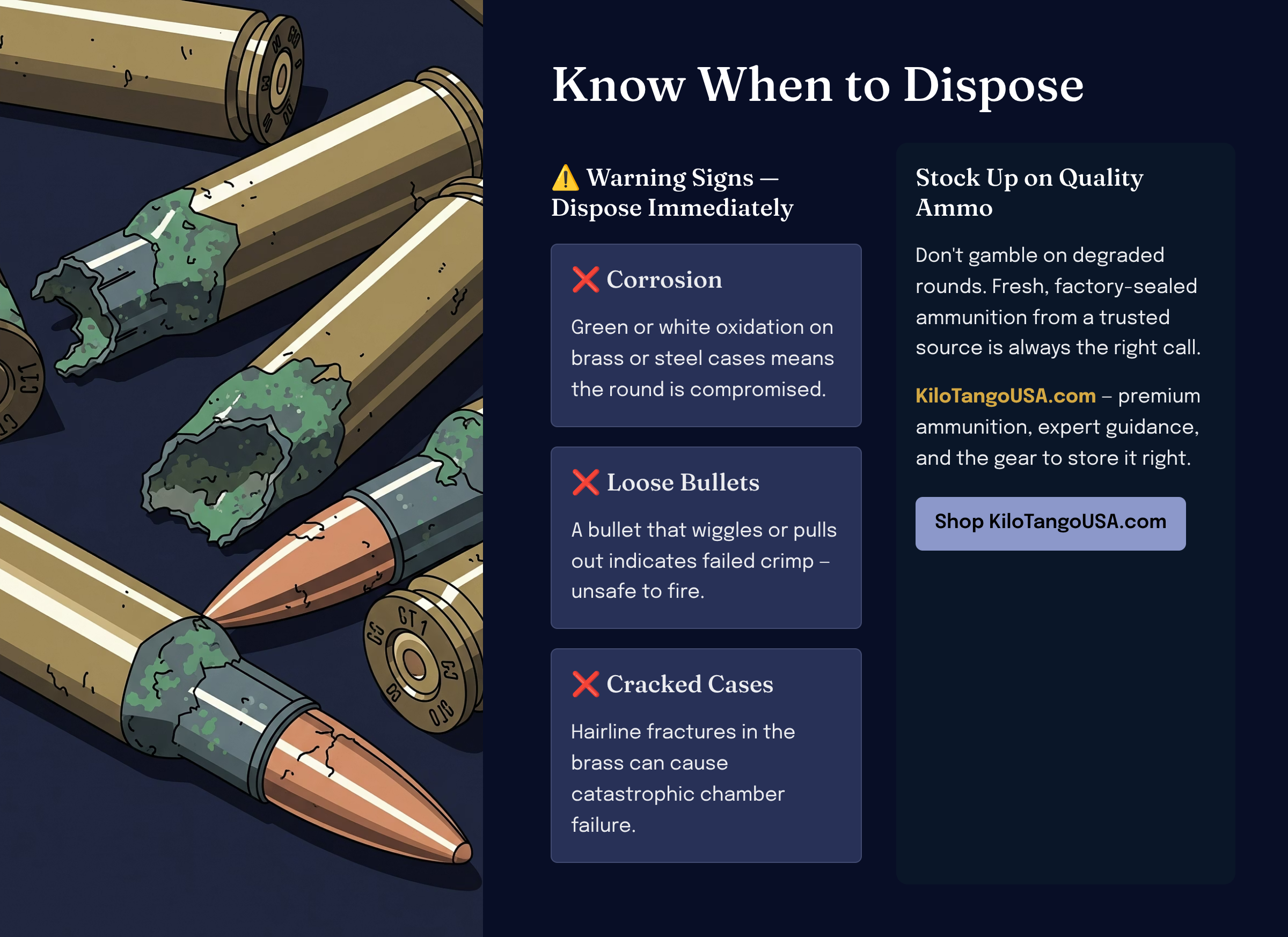
Before shooting older or questionably-stored ammo, give it a visual once-over. Most bad ammo announces itself. Here's what to look for and what it means:
| Warning Sign | What It Means | Verdict |
|---|---|---|
| Green / white corrosion | Active oxidation (verdigris) on case or primer; moisture damage | Do not fire |
| Cracked or split case | Brass fatigue or damage; risk of case failure on firing | Do not fire |
| Loose bullet in case | Lost neck tension; can cause bullet setback and pressure spikes | Do not fire |
| Dented or deformed case | Physical damage; may not chamber or may fail | Do not fire |
| Primer damage / leaking sealant | Compromised primer; misfire or contamination risk | Do not fire |
| Strong solvent / oil smell | Chemical contamination of powder or primer | Do not fire |
| Light surface tarnish on brass | Cosmetic oxidation only; no structural impact | Usually safe |
The key distinction: light tarnish is cosmetic and almost always safe to shoot, while green/white corrosion, loose bullets, and case cracks are hard stops. When in doubt, throw it out — a few cents of ammo is never worth a damaged firearm or injury. Dispose of bad ammo responsibly (many ranges and police departments accept it); never just toss live rounds in household trash.
If a round fails to fire, keep the firearm pointed downrange and wait at least 30 seconds before opening the action, in case of a delayed "hangfire." Then eject and dispose of the dud safely.
Military Surplus Ammo Shelf Life
Military surplus ammunition is the ultimate proof that ammo doesn't really expire. Because it's manufactured to demanding specs and sealed for long-term storage — primers and case mouths are typically lacquer- or asphalt-sealed, then packed in airtight "spam cans" inside ammo cans — surplus ammo regularly fires reliably 40, 50, even 70+ years after it was made. Cold War-era surplus is still shot routinely today.
Two cautions, though:
- Corrosive primers. Much older military surplus (especially mid-20th-century and some Eastern Bloc production) uses corrosive primers. These work fine, but they leave salts in the bore that attract moisture and cause rust if not cleaned out. The fix is simple: clean the bore and gas system with a water-based solvent (even soapy water) soon after shooting, then oil normally. Corrosive ammo isn't dangerous — it just demands prompt cleaning.
- Variable quality and storage history. Surplus quality depends on the country of origin, the manufacturing era, and how it was stored for decades. A sealed spam can opened for the first time is a great bet; loose, repacked, or visibly corroded surplus is a gamble. Inspect carefully and research the specific lot and headstamp before buying or shooting.
Does Ammo Go Bad in a Magazine?
A persistent myth says leaving magazines loaded "wears out the spring" and ruins ammo. For the ammo itself, simply being in a magazine does no harm. And modern magazine springs are designed to be stored compressed indefinitely — springs fatigue from repeated cycling (loading and unloading), not from being held at a constant compression. Leave a quality magazine loaded for years and it'll feed fine.
The real issue with magazine-stored ammo is environment and handling, and it applies specifically to daily-carry ammo:
- Sweat and humidity. Carry ammo rides against your body, absorbing sweat and humidity that can tarnish or corrode the rounds over time.
- Lint and debris. Pocket and holster lint can work into the action and magazine.
- Bullet setback. Repeatedly chambering and re-chambering the same round — common when you unload daily — can push the bullet deeper into the case (setback), raising pressure dangerously. Rotate which round goes on top, and inspect for setback.
The practical rule: rotate and inspect your carry ammo every few months, don't repeatedly re-chamber the same cartridge, and replace the rounds that show wear. Your bulk storage ammo in sealed cans needs none of this attention — it's the carry environment, not the magazine, that matters. (For more on choosing a carry load, see our Best 9mm Self-Defense Ammo guide.)
Stock Up While Prices Are Low
Properly stored ammo lasts decades — which makes buying in bulk during a price dip one of the smartest moves you can make. Search live per-round prices across every major retailer on Kilo Tango, and set a free price-drop alert so you stock up at the bottom of the market.
Frequently Asked Questions
Does ammo expire?
Ammunition doesn't have a true expiration date. Properly stored modern ammo — cool, dry and away from solvents — reliably lasts 20–30 years or more. The 10-year figure manufacturers cite is a conservative warranty number, not a point at which ammo stops working. Storage, not age, determines whether ammo stays good.
How long does ammo last if stored properly?
Stored cool, dry and sealed, modern brass-cased ammo routinely stays reliable for 20–30+ years, and well-sealed military ammo has fired after 50+ years. Moisture, heat and humidity are what shorten shelf life — control those and age is rarely the problem.
What are the signs of bad ammo?
Green or white corrosion, heavy discoloration, loose bullets, cracked or dented cases, damaged primers, leaking sealant, or a strong solvent smell. Light tarnish on brass is cosmetic and usually safe, but visible corrosion, loose bullets, or case damage mean don't fire the round.
Does ammo go bad in a magazine?
Being in a magazine doesn't harm the ammo, and modern springs can stay compressed indefinitely. The real concern is the carry environment — sweat, humidity, lint, and bullet setback from re-chambering the same round. Rotate and inspect carry ammo every few months.
Is it safe to shoot old military surplus ammo?
Often yes. Sealed surplus in spam cans can stay reliable for 50+ years. Two cautions: some older surplus uses corrosive primers (clean the bore with water-based solvent soon after shooting), and surplus quality varies by origin and storage. Inspect carefully and research the lot first.