How to Store Ammo Long Term: The Complete Storage Guide
Stored right, modern ammunition stays reliable for decades. Stored wrong — in a hot attic or a damp garage — it can corrode and fail in just a few years. This guide covers exactly how to store ammo long term: ideal temperature and humidity, the best containers, desiccant, organization and how much to keep on hand.
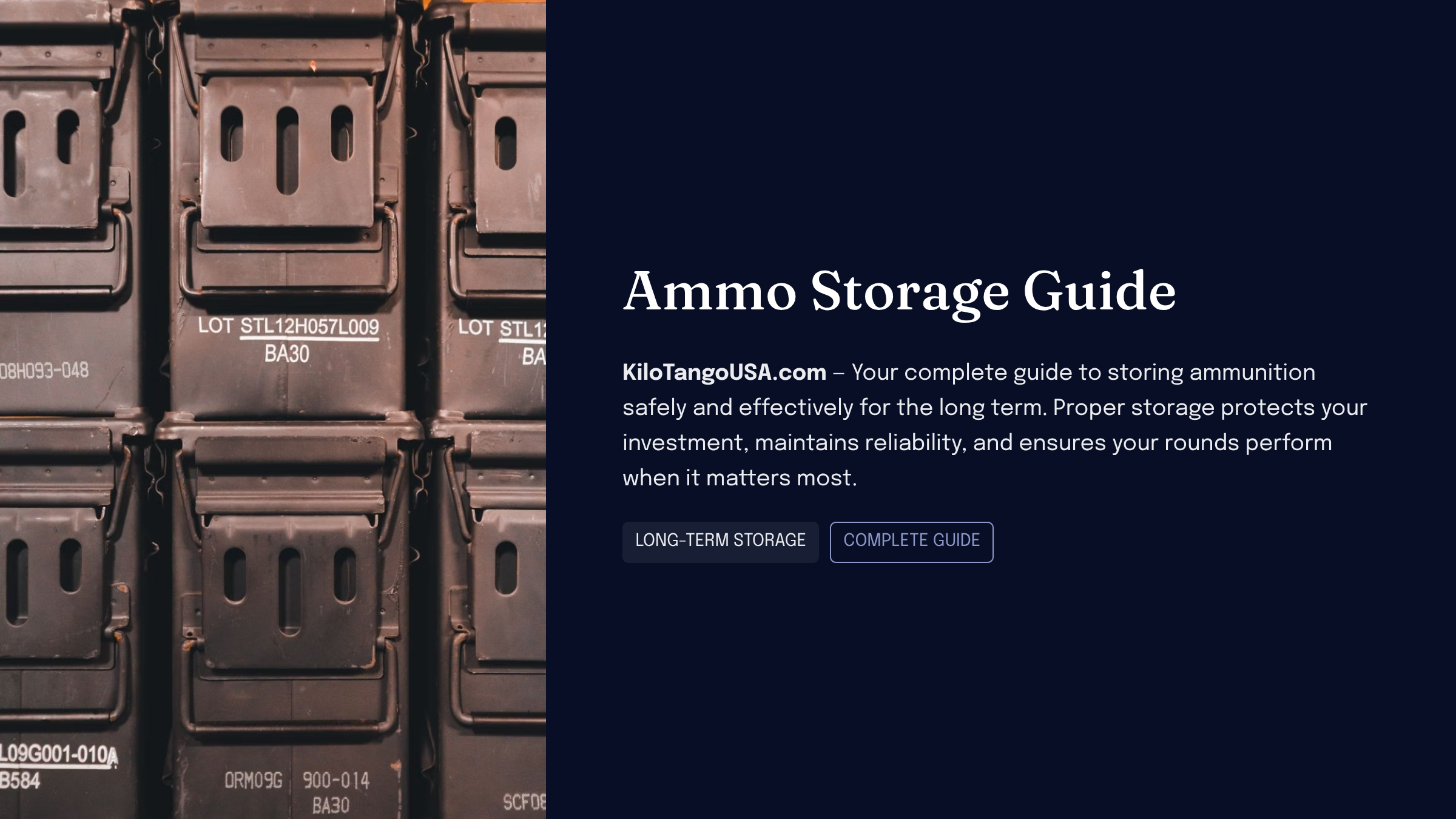
Modern ammunition is remarkably durable. Sealed brass cases, non-corrosive primers, and stable smokeless powders mean a quality box of factory rounds isn't a perishable item like food — it's built to sit on a shelf and work years later. But "durable" isn't the same as "indestructible." Ammo is a chemical product, and like any chemical product it has enemies: heat, humidity, and time. Control the first two and time barely matters; ignore them and time turns against you fast.
The good news is that storing ammo properly is cheap, simple, and doesn't require anything exotic. A few sealed containers, a handful of desiccant packs, and the right spot in your home will keep your stockpile reliable far longer than you'll ever need it — often outliving the person who bought it. This guide walks through every variable that matters, from temperature and humidity to containers, desiccant, organization, and how much to keep on hand. For the related question of shelf life itself, see does ammo expire.
Temperature & Humidity
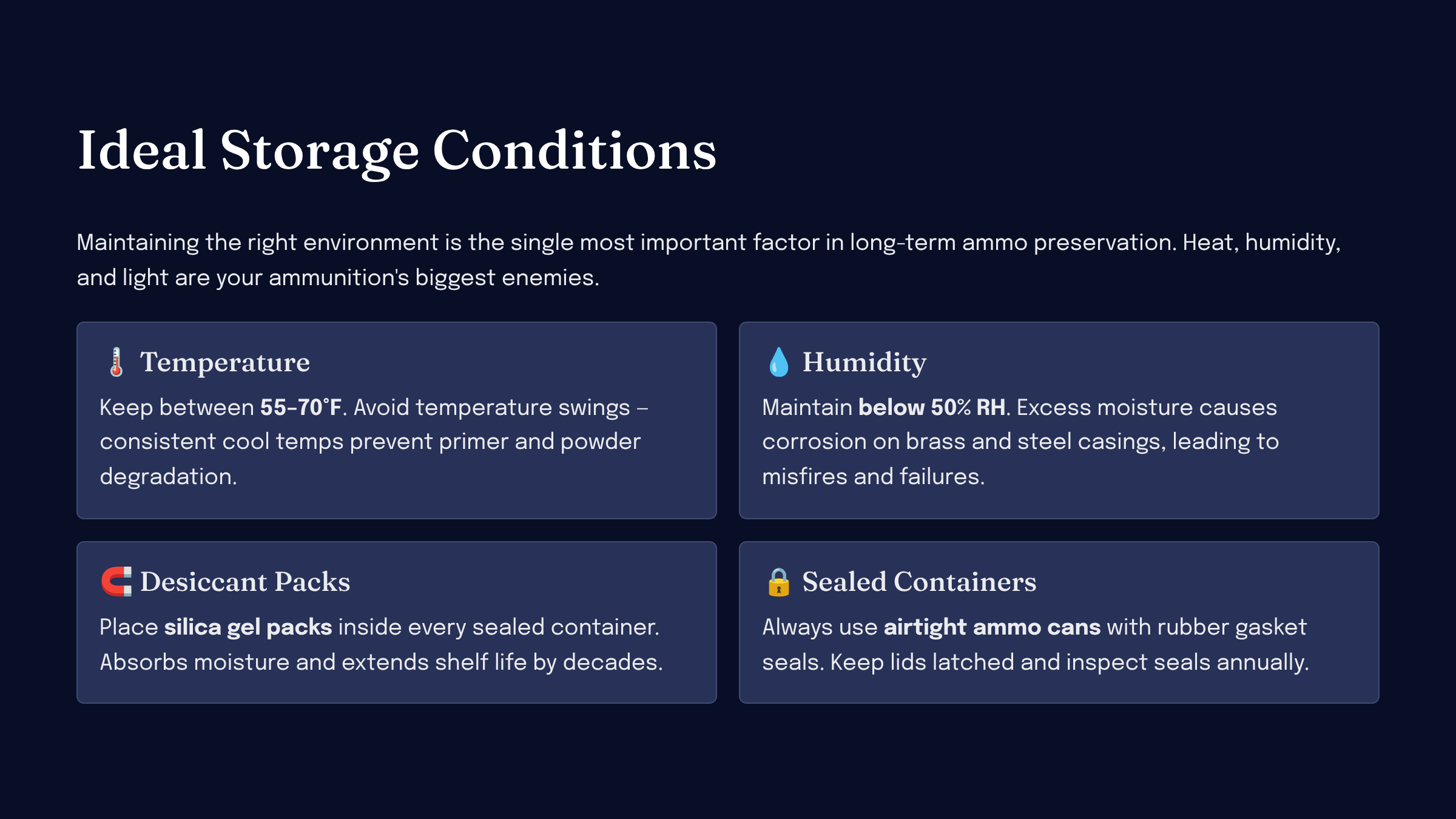
If you remember nothing else from this guide, remember this: temperature and humidity are the two factors that determine how long your ammo lasts. Everything else — containers, desiccant, where you put it — exists to control these two variables. Get them right and your ammo is effectively immortal on a human timescale.
The ideal storage environment is a stable 55–70°F and below roughly 50% relative humidity. Here's why each matters. Heat accelerates the chemical breakdown of powder and primer compounds, and big temperature swings cause the air inside cartridges and containers to expand and contract, which can stress seals and, over years, degrade reliability. Humidity is the bigger killer: moisture corrodes brass cases and primer cups, can creep past case seals to deactivate primers, and leaves you with green or white corrosion and dead rounds.
One point that gets overlooked: stability matters as much as the numbers themselves. Ammo stored at a steady 68°F will outlast ammo that swings from 40°F to 110°F across the seasons, even if the swinging storage "averages out" to something reasonable. Repeated heating and cooling drives condensation cycles and mechanical stress that a stable environment never sees. That's why an unheated shed that hits both extremes is worse than a closet that barely moves.
Aim for cool, dry, and stable. A plain closet inside your living space — where the temperature and humidity barely change all year — beats any extreme location, no matter how convenient. If a spot is comfortable for you to sit in, it's comfortable for your ammo.
Best Ammo Storage Containers
The right container does two jobs: it seals out moisture and it keeps your rounds organized and protected. Here are the three best options, ranked.
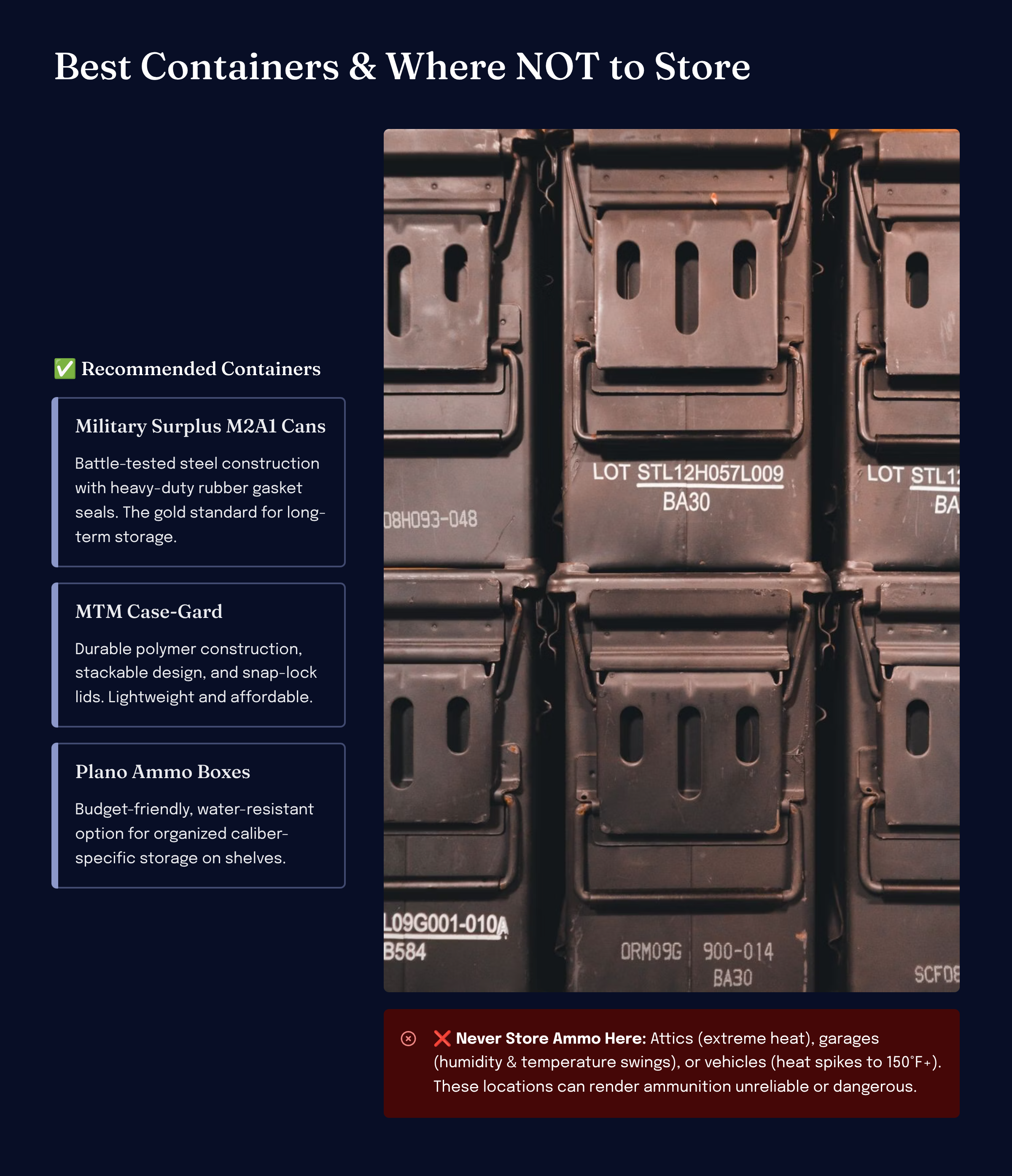
Military Surplus Steel Ammo Cans
The gold standard for long-term storage. Genuine surplus steel cans — the M2A1 .50-cal and the larger PA108 "fat-50" — have a rubber gasket in the lid that seals airtight, locking out moisture and air. They're rugged enough to stack and abuse for decades, stackable for efficient storage, and cheap on the surplus market. One sealed can with desiccant inside is the single best home for bulk ammo you can buy.
steel · gasket-sealed · M2A1 / PA108MTM Case-Gard Polymer Ammo Boxes / Cans
Lightweight and purpose-built for organization. MTM's polymer ammo boxes and cans use an O-ring seal that keeps them water-resistant, and the smaller flip-top boxes hold loose rounds neatly sorted by caliber. Easier to carry than steel and great for keeping your stockpile sorted, they're an excellent companion to or substitute for steel cans.
polymer · O-ring · organize by caliberPlano Field / Ammo Boxes
Affordable, stackable, general-purpose storage. Plano's field and ammo boxes are an inexpensive way to corral bulk ammo and gear for range trips and rotation. They aren't as airtight as a gasketed steel can, but they're a solid budget option for organizing and transporting quantity.
polymer · budget · bulk & rangeWhatever container you choose, keep your ammo in its original boxes inside the can. The factory boxes preserve the headstamp and lot information printed on them, keep rounds from rattling and banging against each other, and make it easy to grab a known quantity. A steel can full of loose, mixed rounds is a step backward — boxes inside cans is the way.
Desiccant: Keep It Dry
Since humidity is the number-one enemy, a small investment in desiccant pays off. Silica gel desiccant packs tossed inside each sealed container absorb whatever residual moisture got trapped when you closed the lid, keeping the interior dry even in a humid climate.
How much do you need? As a rough guide, a couple of standard packs — or one larger unit — per .50-cal can is plenty. More cans mean more packs; scale up for larger containers. Many desiccants use indicating silica gel that changes color when it's saturated (commonly blue-to-pink or orange-to-green), giving you a visual cue that it's full. When that happens you can recharge it by baking it in a low oven per the manufacturer's instructions to drive the moisture back out, then reuse it — or simply replace it. Pair your cans with a cheap hygrometer so you can actually monitor the humidity inside rather than guessing.
Desiccant only does its job inside a sealed container. A pack sitting on an open shelf is just trying to dry the entire room and accomplishes nothing — it'll saturate almost immediately. Seal the can first, then let the desiccant manage the small volume of air trapped inside.
Where to Store Ammo (and Where Not To)
Once your ammo is sealed and dry, location is the last piece. The principle is simple — climate-controlled, interior space wins — but the specifics are worth spelling out as a clear do-and-don't list.
Do store ammo in:
- An interior, climate-controlled room. A bedroom closet is ideal — it stays close to a stable room temperature and humidity year-round.
- An interior basement room that stays dry. Basements are naturally cool and stable, which is great — provided the room doesn't flood, sweat, or run humid.
- A dedicated cabinet or chest inside conditioned living space, where it's organized and out of the way.
Don't store ammo in:
- Attics. They bake in summer — easily over 120°F — which is the worst thing you can do to ammunition.
- Unconditioned garages. Heat, big humidity swings, and chemical fumes from gas, solvents, and exhaust all work against your rounds.
- Car trunks. Constant heat cycling and temperature extremes make a vehicle one of the worst long-term homes for ammo.
- Damp basements that flood or sweat on the walls and floor. The cool is good; the moisture is not.
One worthwhile exception: a gun safe kept in conditioned space is an excellent place to store ammo — it adds security and keeps rounds away from children and unauthorized hands. Because a closed safe can trap humidity, drop in a desiccant dehumidifier rod or packs to keep the interior dry.
Organize & Label Your Stockpile
A stockpile you can't inventory is a liability. The moment you own more than a few boxes, a simple labeling system turns a pile of cans into an organized, manageable supply. Mark each can clearly with its caliber, date purchased, and lot number, then rotate your supply oldest-first (FIFO — first in, first out) so the oldest ammo gets shot before newer stock.
This pays off in three ways: you can take inventory at a glance, you can respond instantly if a manufacturer issues a recall on a specific lot, and you can grab exactly the can you want without opening five of them. A piece of tape and a marker is all it takes. At minimum, label each can with:
- Caliber — e.g. "9mm 115gr FMJ" so there's no guessing.
- Date purchased — for FIFO rotation and tracking age.
- Lot number — copied from the box, so you can act on recalls.
- Round count — optional, but makes inventory effortless.
How Much Ammo to Keep on Hand
There's no single right answer, but there is sensible guidance. A reasonable baseline is at least ~500 rounds per caliber you actively shoot, scaling up for your primary defense and training calibers, which you'll burn through far faster than the rest. That baseline balances three things: readiness when you need it, the ability to capitalize when prices drop, and the reality that ammo takes up space and weight.
The smart play is to buy in bulk when prices dip rather than topping off in a panic when they spike. Ammo prices swing widely with demand, and stocking up during a sale is how you build a deep supply cheaply — then store it right so it lasts. Our bulk ammo buying guide covers how to do exactly that. Watching prices over time at major retailers like Lucky Gunner and Sportsman's Guide helps you recognize a genuine deal when you see one, so you can buy heavy at the bottom and sit out the spikes.
Signs of Bad Ammo
Even well-stored ammo is worth a quick visual inspection before it goes downrange, and stored-wrong ammo absolutely needs it. Set aside any rounds showing these red flags:
- Green or white corrosion on the case or around the primer — a sign moisture has gotten to it.
- Loose or wiggling bullets that move in the case mouth, indicating lost neck tension and a compromised round.
- Heavy discoloration or tarnish well beyond a light patina, suggesting prolonged exposure to humidity.
- Cracked or split cases — an obvious structural failure; don't fire these.
To be clear, light surface tarnish on otherwise sealed brass is usually just cosmetic and the rounds are fine. It's the green corrosion, loose bullets, and cracks that mean trouble. For the full breakdown on shelf life and what actually goes wrong over time, see does ammo expire.
Ammo Storage & the Law
For most people, storing ammo is unregulated: most states set no limit on how much ammunition you may own or store. That said, a few localities impose quantity caps or specific storage rules, and some jurisdictions require safe or locked storage where minors are present in the home. Because these rules vary by state and even by city or county, it's worth a quick check of your local code before you build a large stockpile or store ammo where children could reach it. Our state ammo laws guide is a good starting point for understanding what applies where you live.
Putting It All Together
Storing ammo for the long haul comes down to a handful of habits that take almost no effort once they're in place. Keep it cool, dry, and stable — a steady 55–70°F and under 50% relative humidity. Seal it in steel ammo cans with desiccant inside, in its original boxes. Put those cans in an interior, climate-controlled space — never an attic, garage, or car trunk. Label every can with caliber, date, and lot, and rotate oldest-first. Keep a sensible reserve — ~500+ rounds per caliber you shoot — and buy heavy when prices drop. And give your rounds a quick inspection for corrosion before you load them.
Do that, and your ammunition will stay reliable for decades — long past the point you'll ever need it to. The whole system is cheap and simple, and it's the difference between a stockpile you can count on and a box of question marks. For a deeper look at how long rounds actually last and the signs they're past their prime, read does ammo expire.
Stock Up at the Right Price
The best stockpiles are built by buying in bulk when prices dip — and then storing it right so it lasts for decades. Search live prices across every major retailer on Kilo Tango, buy heavy at the bottom, and seal it away with confidence.
Frequently Asked Questions
Can you store ammo in a safe?
Yes, and it's a great option — a gun safe in a climate-controlled room keeps ammo secure, out of sight, and away from minors. Just keep the safe in conditioned space (not a hot garage), and consider a desiccant dehumidifier rod or packs inside, since closed safes can trap humidity. Store the ammo in its boxes or sealed cans within the safe.
Does ammo need to be locked up?
Federal law doesn't require locked ammo storage, but some states and localities do — especially where minors could access it. Even where it's not required, locking ammo away is smart for safety and security. Check your state and local laws; our state-laws guide is a starting point.
How long will properly stored ammo last?
Modern, sealed, brass-cased ammunition stored cool and dry will reliably last for decades — commonly 20-30+ years, and often much longer. Heat and humidity are what shorten that lifespan dramatically. Keep it sealed, cool and dry and it will very likely outlast you.